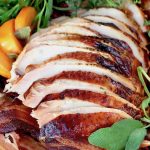
Bacon Wrapped Turkey Recipe
This Smoky Bacon Wrapped Turkey is the mother of all roasted turkeys. Saying it's over-the-top might be an understatement, and it will surely bring your Thanksgiving feast to the next level! * If you're brining your turkey (recommended), it must be done before you begin this recipe. It should go in the brine about 16 hours ahead of roasting. Here's the recipe and how to do it.
Servings: 12
Calories: 600kcal
Equipment
Ingredients
For the butter mixture
- ½ cup unsalted butter, softened
- 2 teaspoons smoked paprika
- 2 teaspoons minced fresh garlic
- 2 teaspoons finely chopped fresh rosemary, washed and dried
- 1 tablespoon finely chopped fresh sage leaves washed and dried
- 1 teaspoon finely chopped fresh thyme washed and dried
- 1½ tablespoons lemon juice
For the turkey
- 1 approximately (12-pound) turkey
- about 12 strips bacon
- about 10 small and strong fresh rosemary sprigs, washed and dried
Instructions
- If you're brining your turkey, it must be brined before you begin the remainder of the steps, about 16 hours ahead. (Brine recipe and instructions are here.)
- Set the oven and prepare the pan. Preheat the oven to 500°F and adjust a rack that will fit your roasting pan and turkey. The rack will likely need to be towards the bottom of the oven. Then prepare a large roasting pan with a raised rack, and add about a cup of water to the bottom of it.
For the butter mixture
- Make compound butter by combining the softened butter with the paprika, garlic, rosemary, sage, thyme and lemon juice. Set aside.
For the turkey
- Prepare the turkey and add the butter to it. Remove the neck and insides of the turkey, and pat dry with paper towels. Use your hands to loosen the skin on the turkey breast and legs. Then rub all but about 2 tablespoons of the compound butter under the skin, being careful to leave it intact. Set the remaining butter aside.
- Truss the turkey. Truss the turkey with butcher's twine. Trussing the turkey helps it stay juicier, and helps it hold its shape for a pretty presentation. Here's How to Truss a Turkey.
- Begin roasting. Place the turkey, breast side up, on the roasting rack and into the oven. After about 15 minutes, use a basting brush to spread the rest of the butter on the turkey's surface. Continue to roast until the skin is golden brown, about 10 more minutes. Then remove it from the oven and reduce the heat to 350°F.
- Turn the turkey and add the bacon. Gently turn the turkey over so the breast side is down on the rack. (Yes, this is tricky with a big turkey -- you might want to use heat resistant gloves or hold each end with paper towels for a better grip.) Cover the back and sides of the turkey with the bacon strips, using rosemary sprigs to hold them in place if they're slipping.
- Continue roasting. Return the turkey to the oven (as it is, breast side down) and roast until the internal temperature is 155°F. The final internal temperature will be about 165°F, as the turkey will continue to cook for several minutes outside the oven. The juices should run clear and the legs should move easily when it's done. Cooking times might vary, but it should take about 2 hours. If your turkey is getting too brown before it has finished cooking, cover it loosely with foil.
- Rest the turkey, carve and serve. Wait at least 20 minutes before carving (this allows the juices to settle). Remove the bacon and add it to your serving platter. Place the turkey slices over the bacon as you carve. Garnish your platter with fresh herbs.
Notes
Turkey size: this recipe is for an approximately 12-pound turkey. Plan on about 1 pound per person.
Brining: if you brine the turkey (recommended), it goes in the brine about 16 hours ahead. If you don't brine it, season the butter mixture with salt and pepper to taste.
Make ahead: the compound butter can be made up to 5 days ahead. Set it out a few hours before roasting so it's at room temperature.
Bacon: any bacon works (I love applewood smoked), but don't use turkey bacon.
Wing tips: wrap them in foil after the first 15 minutes of roasting so they don't char.
Nutritional information is automatically calculated, so it should only be used as an estimate.
Nutrition
Calories: 600kcal | Carbohydrates: 1g | Protein: 64g | Fat: 38g | Saturated Fat: 14g | Polyunsaturated Fat: 7g | Monounsaturated Fat: 12g | Trans Fat: 0.3g | Cholesterol: 258mg | Sodium: 379mg | Potassium: 917mg | Fiber: 0.2g | Sugar: 0.1g | Vitamin A: 427IU | Vitamin C: 1mg | Calcium: 62mg | Iron: 6mg