Ancho Chile Enchilada Sauce is on the mild side. It's full of rich, smoky, warming flavors that will have you licking your plate. This ancho sauce was created for enchiladas, but it's incredibly versatile, and can be added to all sorts of dishes.
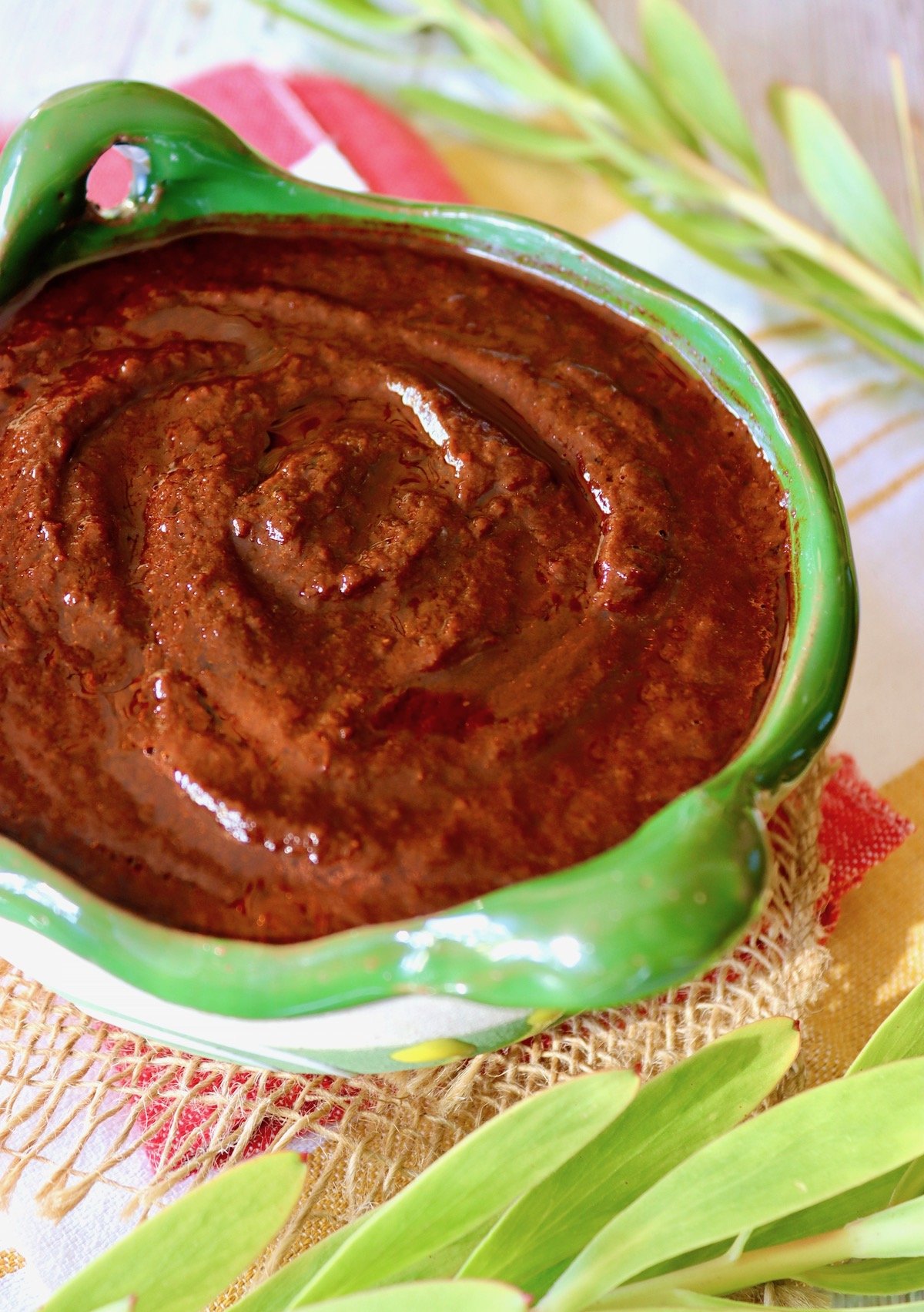
When I have this ancho Sauce at the ready in the fridge, I find I use it almost daily. It's so delicious!
It's easy and fun to make, and you'll want it on everything!
Ingredients
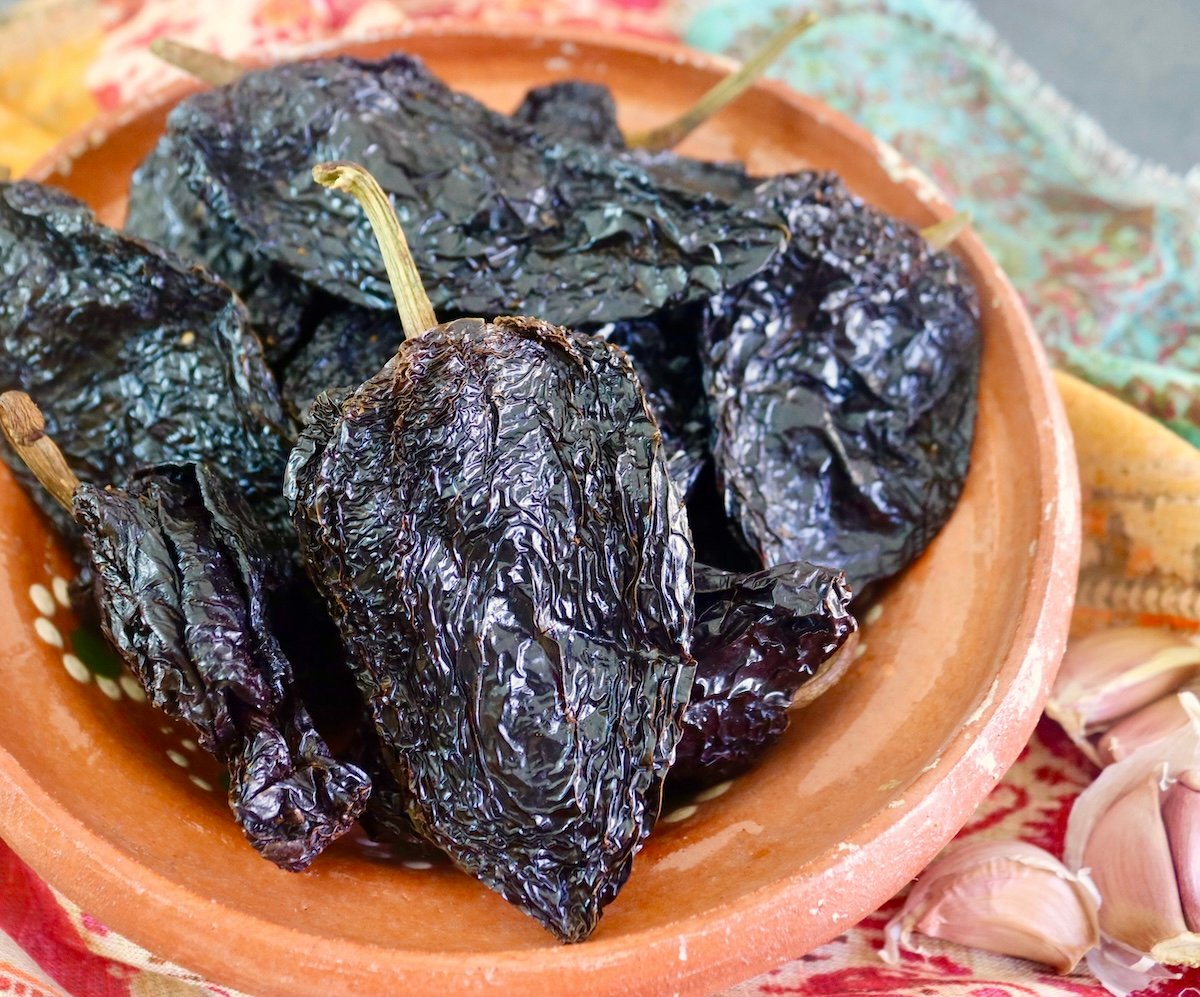
- ancho chiles - Ancho chiles are fairly common, so they should be easy to find. Mexican markets will almost always have them, and you will likely see them in the produce sections of most larger grocery stores. What's a good substitute for ancho chiles? If you can't find anchos, pasillas, guajillos and mulatos are good substitutions.
- ancho chile hydrating liquid - To prepare dried chiles for recipes they almost always have to be hydrated in water (or other liquids). In this recipe we use water, which will become part of the recipe.
- vegetable stock - Unsalted stocks are best for cooking so you can control the level of salt. Substitutions: Chicken stock, or additional hydrating liquid from the chiles.
- garlic - The garlic adds a fresh kick of flavor.
- cinnamon and cumin - Cumin and cinnamon both add warmth and delicious flavor to the smoky chiles.
- salt and sugar - Much like salt, sugar can bring out the natural flavors of ingredients. In this recipe the touch of sugar balances the slight bitterness of the peppers.
What are Ancho Chiles?
Ancho chiles are dried poblano chiles that are harvested early. (Fully mature Poblanos are called Mulatos when they are dried.)
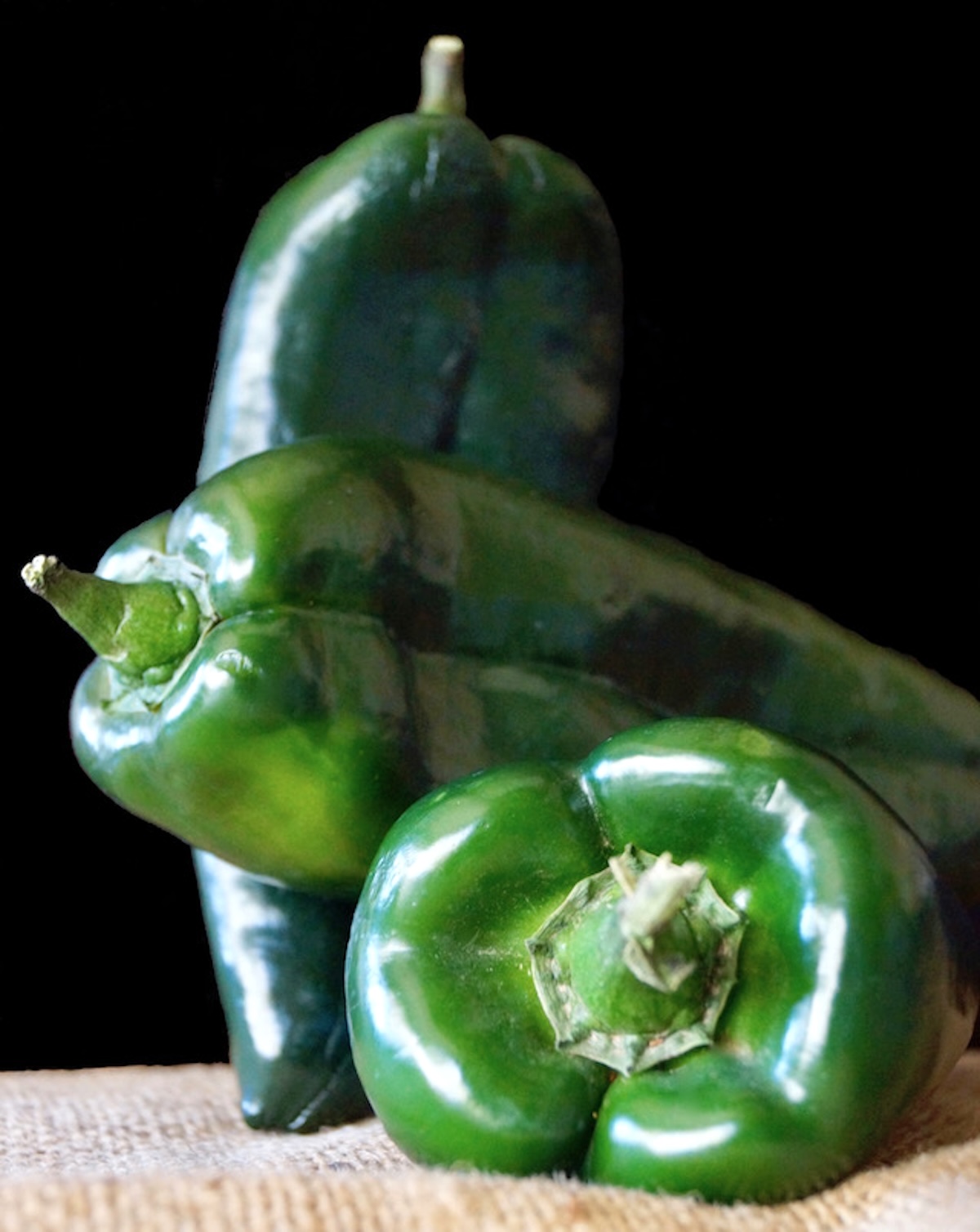
When a Poblano chile is fresh, it's dark green and shiny. They're usually mild in heat and have a rich flavor.
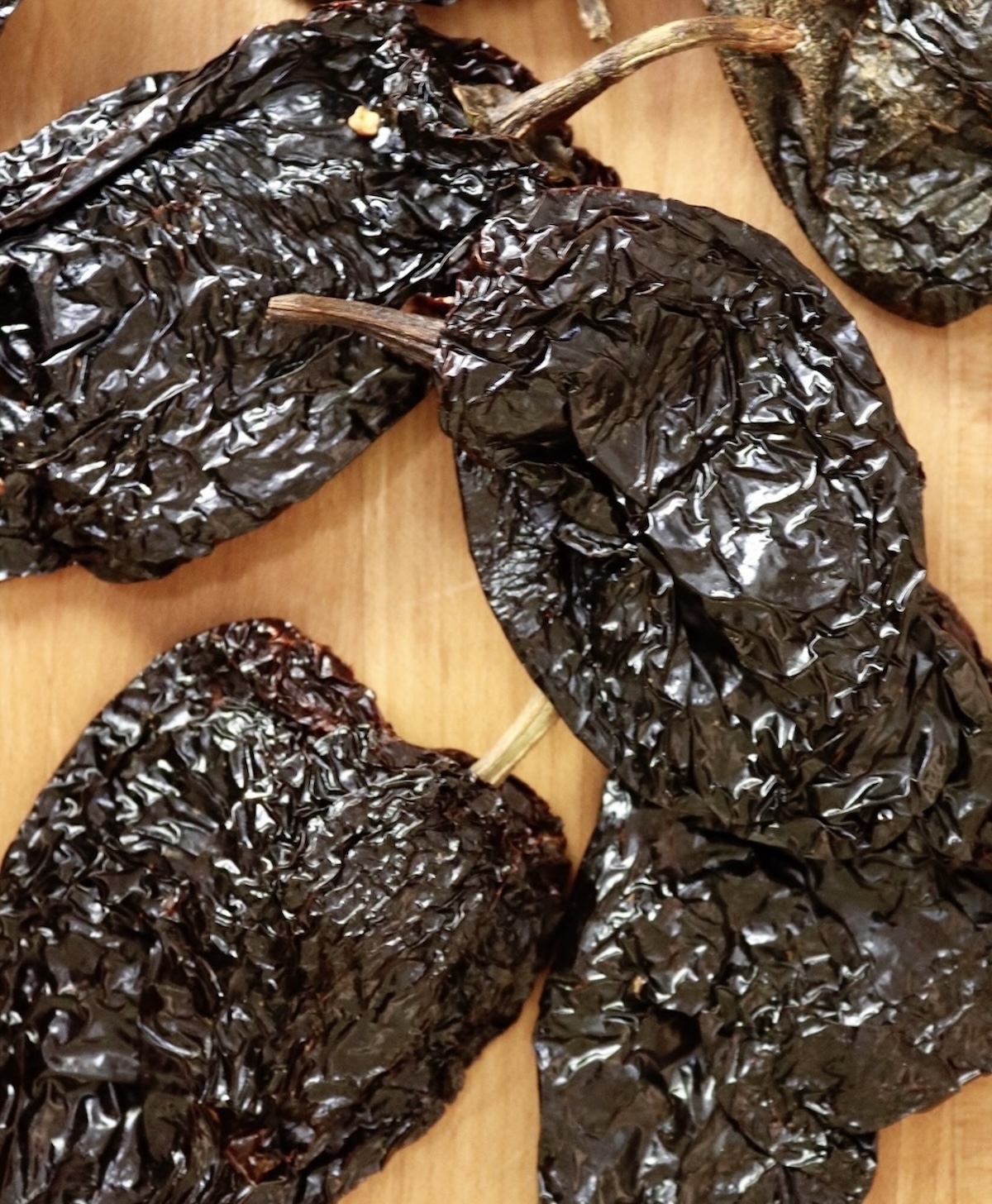
What does an Ancho chile taste like?
When poblanos are dried, and become ancho chiles, they take on a smoky, deeper flavor. Many people describe the flavor as having hints of cherry, raisins and prunes. I agree, and along with the smokiness, it's fantastic.
How to Make Ancho Sauce for Enchiladas
- Place the dried chiles in a medium-sized sauce pot and add just enough water to cover them. Bring the water to a boil, and then cover the pot and turn off the heat. Let the chiles hydrate in the hot water until they're soft, at least 45 minutes.
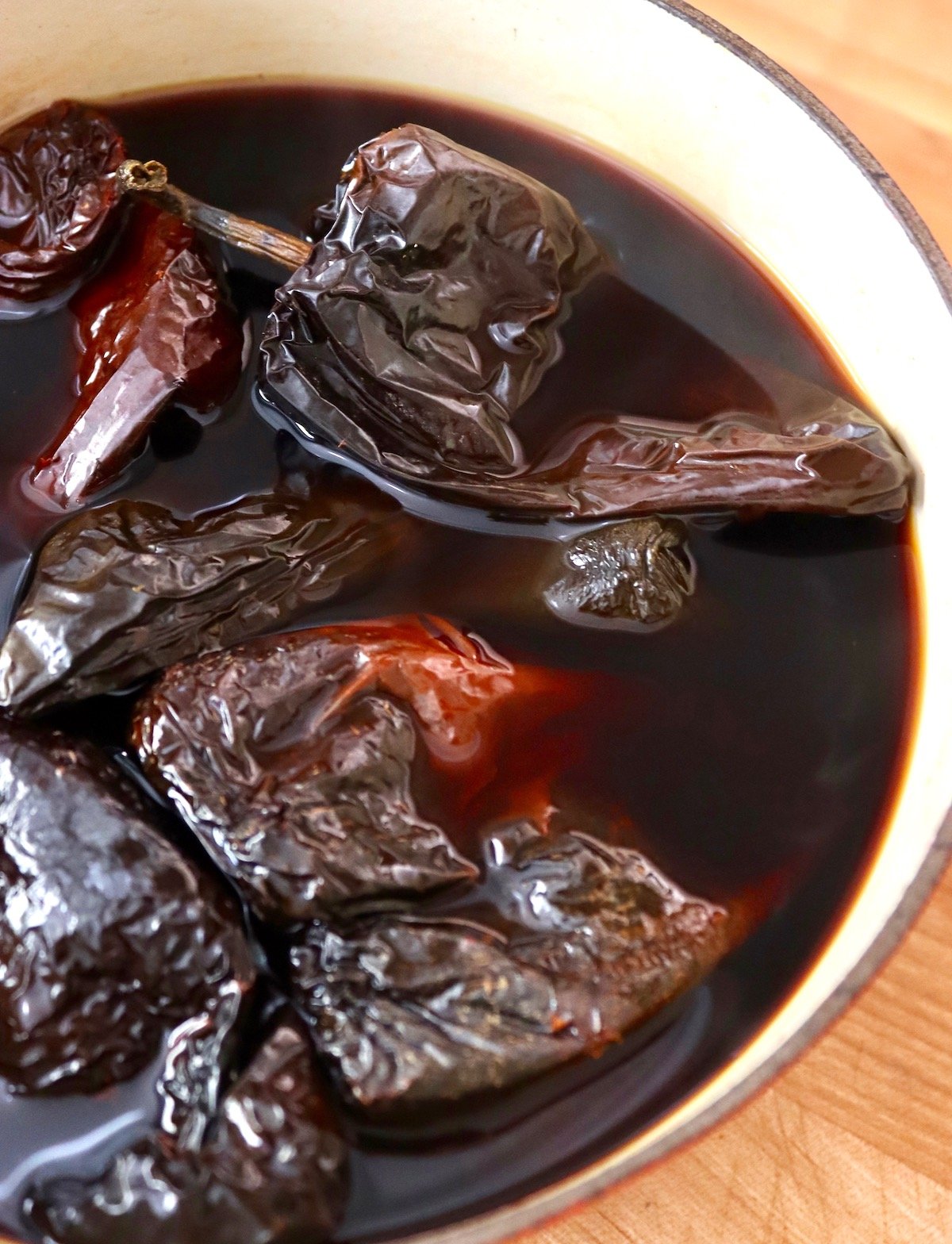
* HYDRATING LIQUID * The water (or any other liquid) that one hydrates chiles in, should not be thrown out! If it's not used in the recipe, save it to use as a stock for cooking soups and rice, or to add to sauces.
- Use a slotted spoon to take the chiles out of the pot, and keep the liquid in the pot! Remove the stems and seeds.
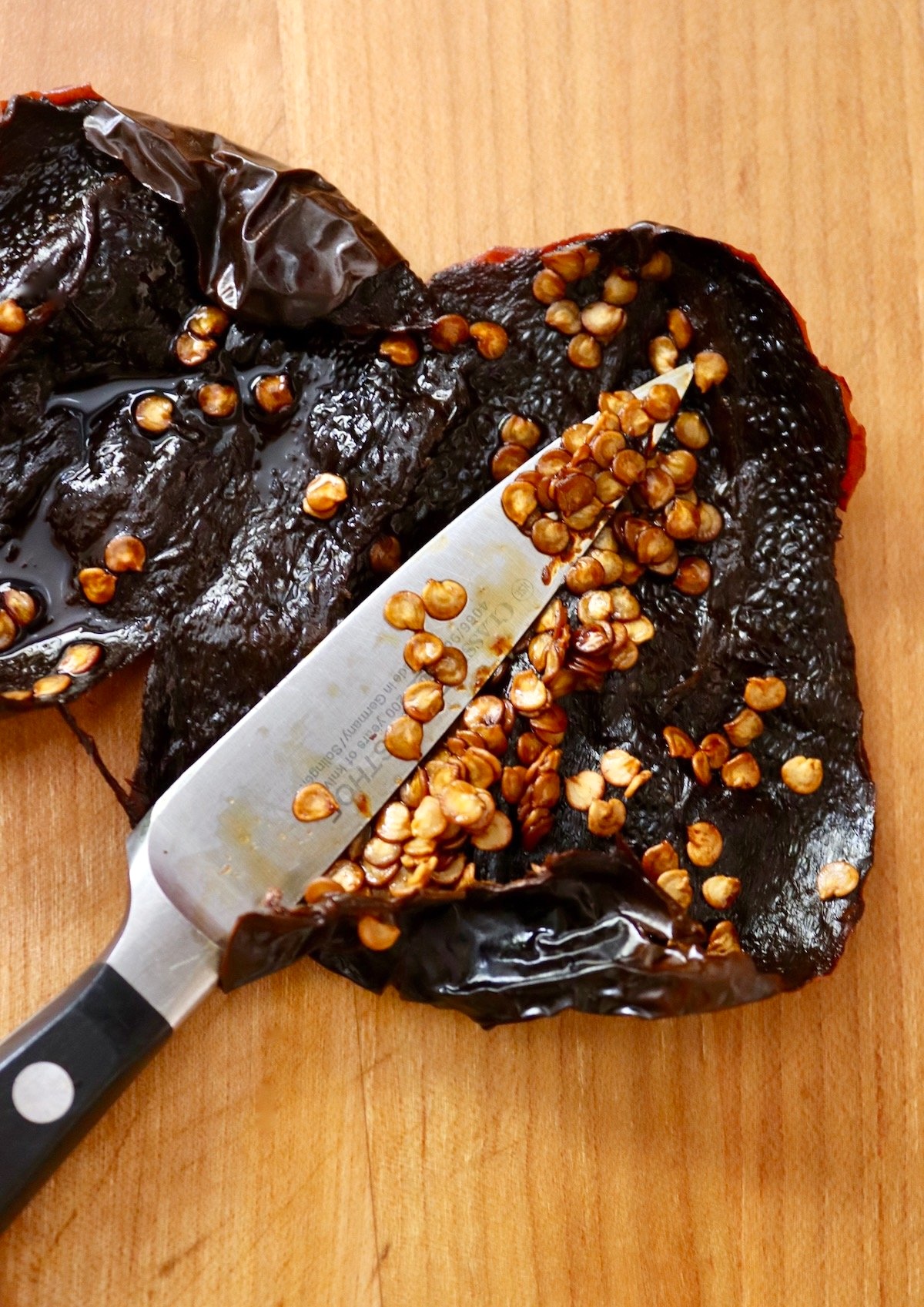
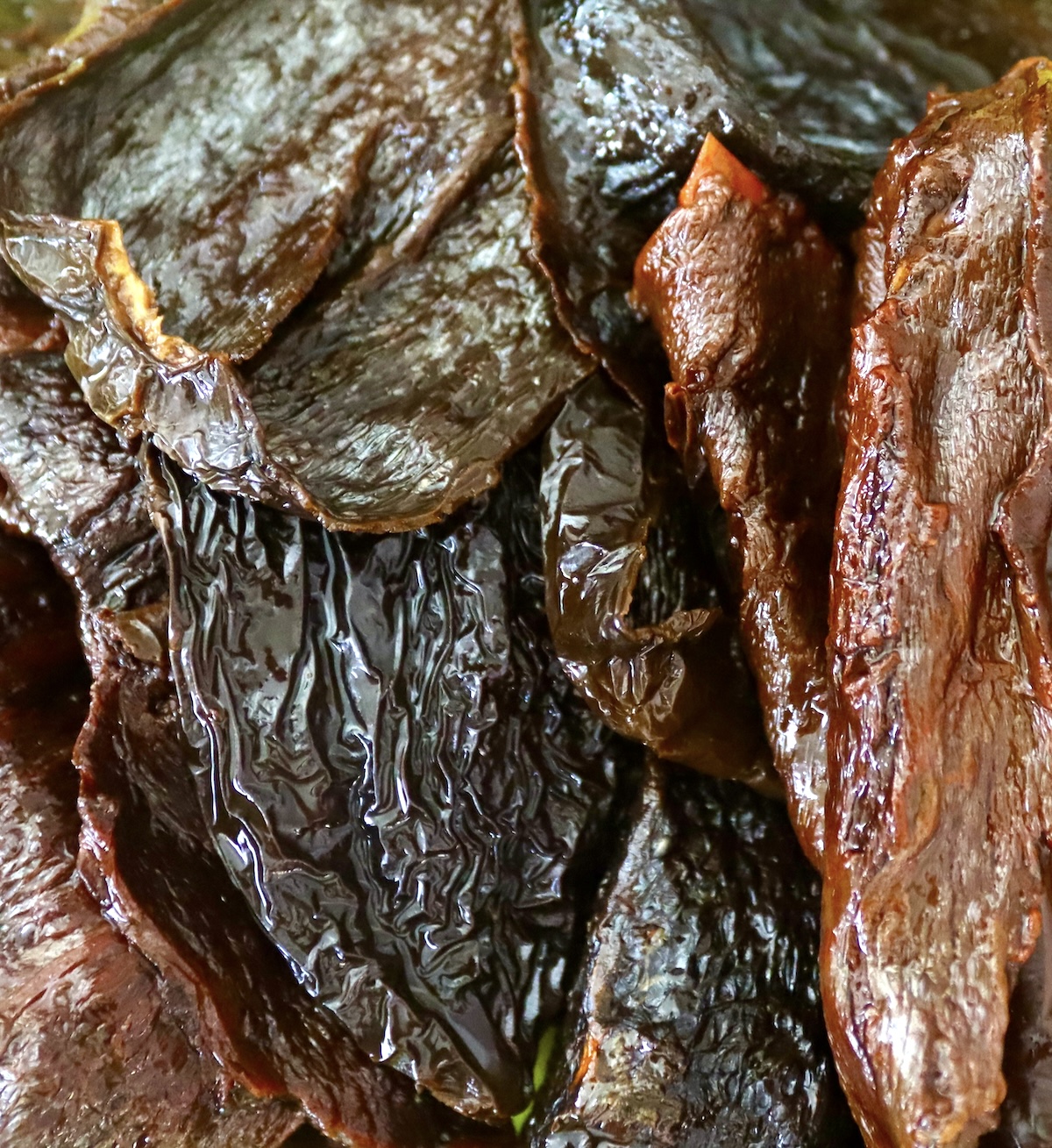
- Add the hydrated chiles to the blender. Remove 2 cups of the hydrating liquid from the pot and pour it in the blender. (Do not throw out remaining liquid as you can use it as a stock in other recipes, like rice.)
* Pro Tip * Even though anchos are a more mild pepper, if you're very sensitive to the heat, I suggest wearing cooking gloves.
- Add the stock, garlic, cumin, sugar, salt and cinnamon to the blender. Blend until the mixture is as smooth as possible.
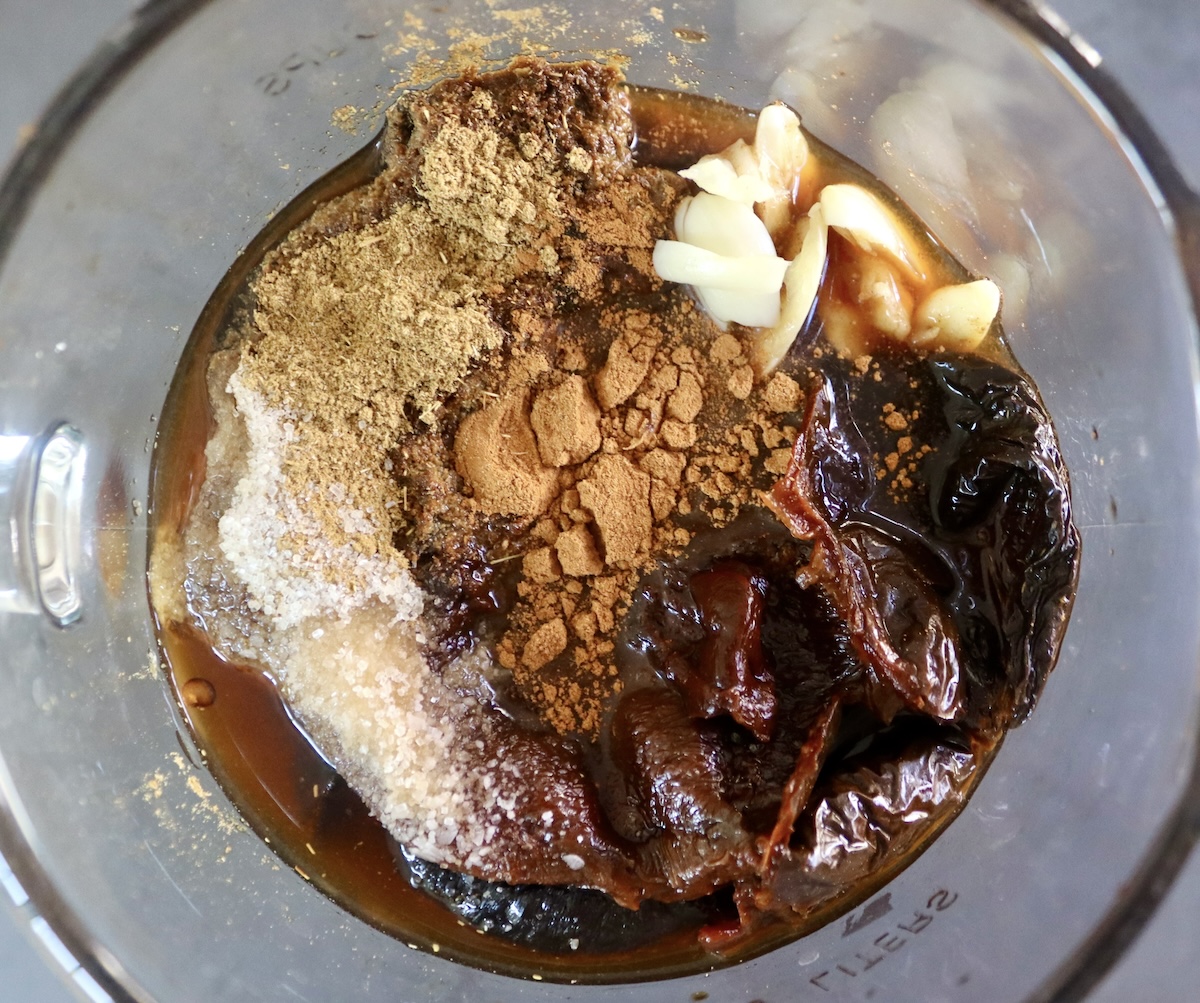
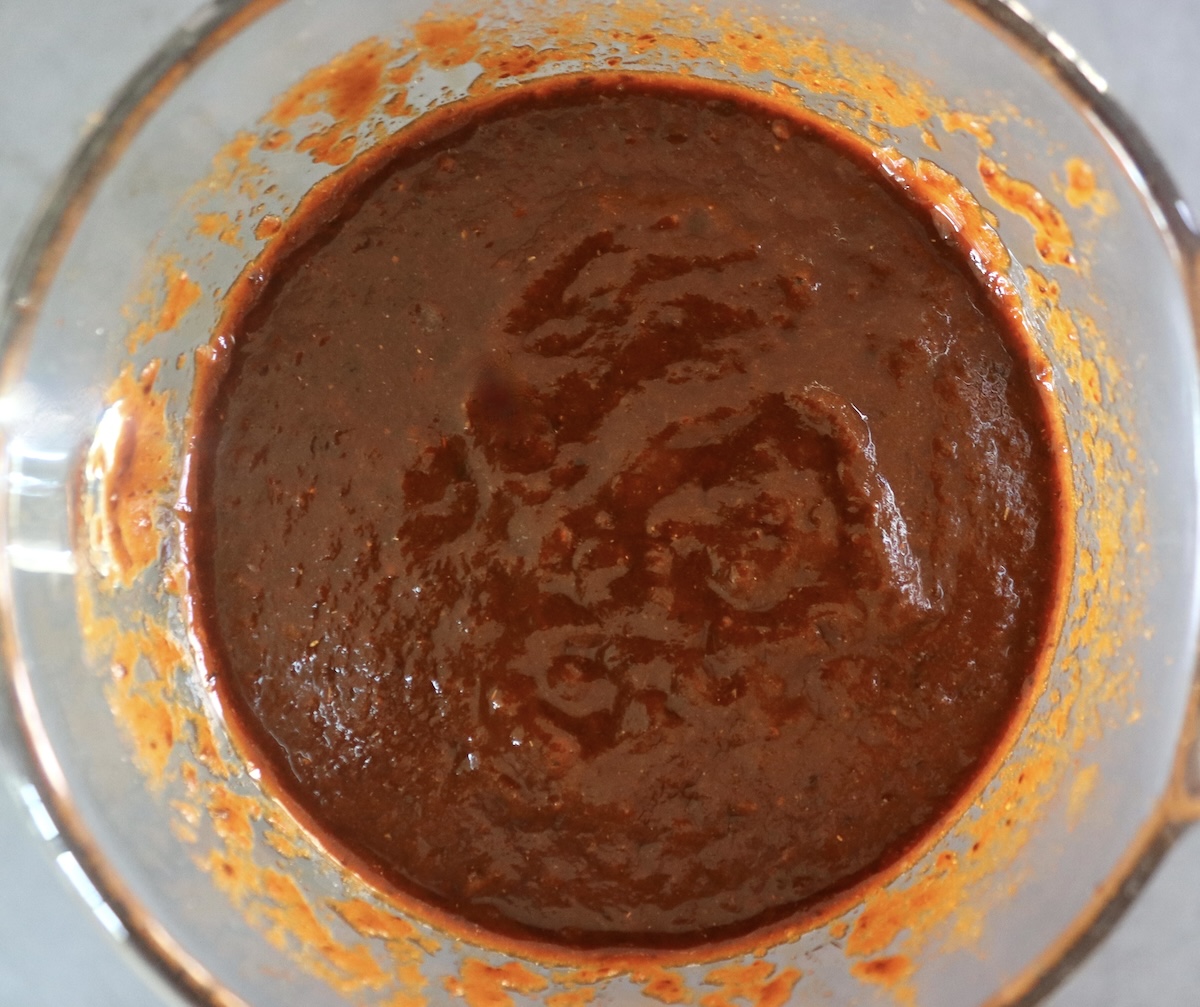
Recipe Tip: If you don't have a blender, use a food processor fitted with the blade attachment.
Variations
- Hotter version. To make the sauce with more heat, you can either add a bit of cayenne pepper to taste, or rather than all ancho chiles, use a few chipotles, which are dried and smoked Jalapeños.
Can you make it ahead?
- Yes, this sauce will keep nicely in a tightly sealed container for about 3 weeks in the refrigerator.
- You can freeze it in heavy duty zip-lock bags for about two months. Lay the bags flat to freeze, and thaw to room temperature before using.
Uses for Ancho Sauce
This sauce can be added to so many different foods! Though there are certainly no rules as to where to use it, here are a bunch of delicious ideas.
- Chilaquiles. Chilaquiles are a traditional Mexican breakfast dish made with corn tortillas cut into quarters, fried, and then cooked in salsa or sauce, and sprinkled with cheese.
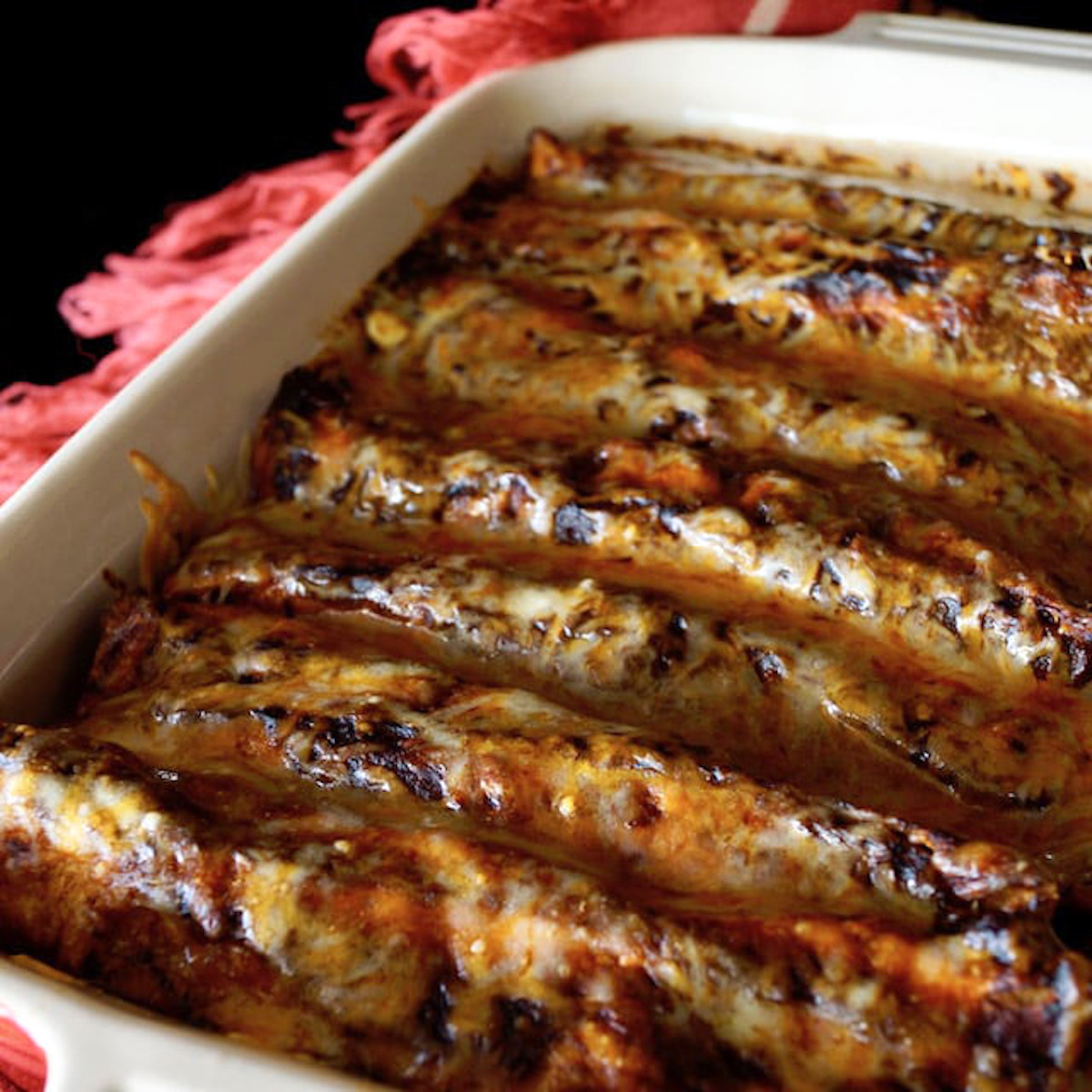
- Enchiladas (of course). Dredge the tortilla in the ancho sauce before rolling the enchiladas and then drizzle it over the top before baking. (See below image.)
- Stews. Add a couple of tablespoons to a finished stew for a smoky, rich flavor.
- Scrambled eggs. Drizzle the sauce on top, or mix some into the eggs about halfway through the cooking process.
- Omelets. Just add a layer to the inside of the omelet before you fold it.
- Sandwiches and burgers. Spread it on the bread. And you can mix it right into the meat when you're making burgers.
- Burritos. Drizzle it into the filling ingredients before rolling.
- Tacos. A spoonful or two on top enhances any taco.
- Rice. Add some of the sauce to your cooking liquid for rice. It'll flavor every grain.
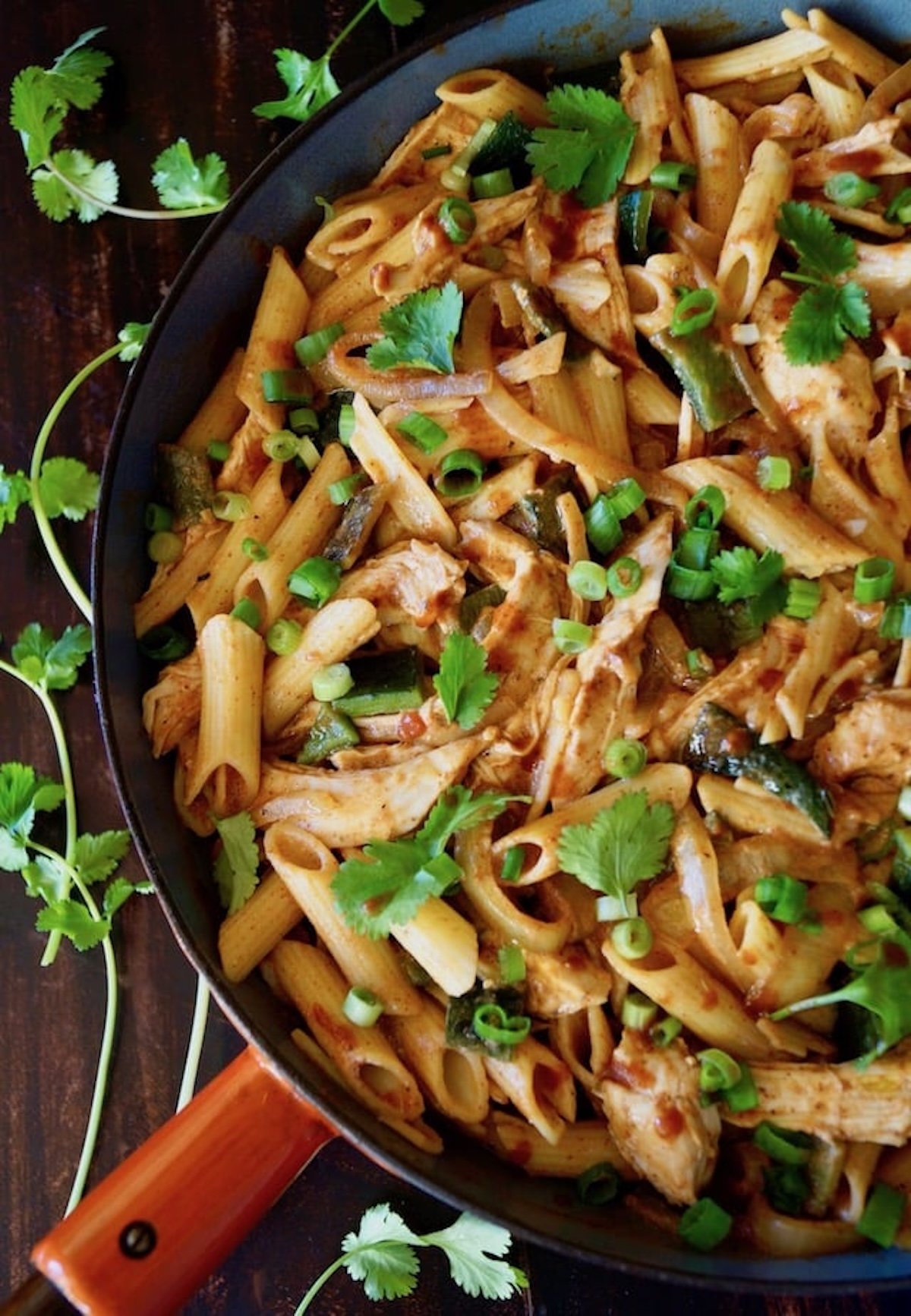
- Pasta. If you want to make a pasta dish with a Latin vibe, this is the answer. (See below example).
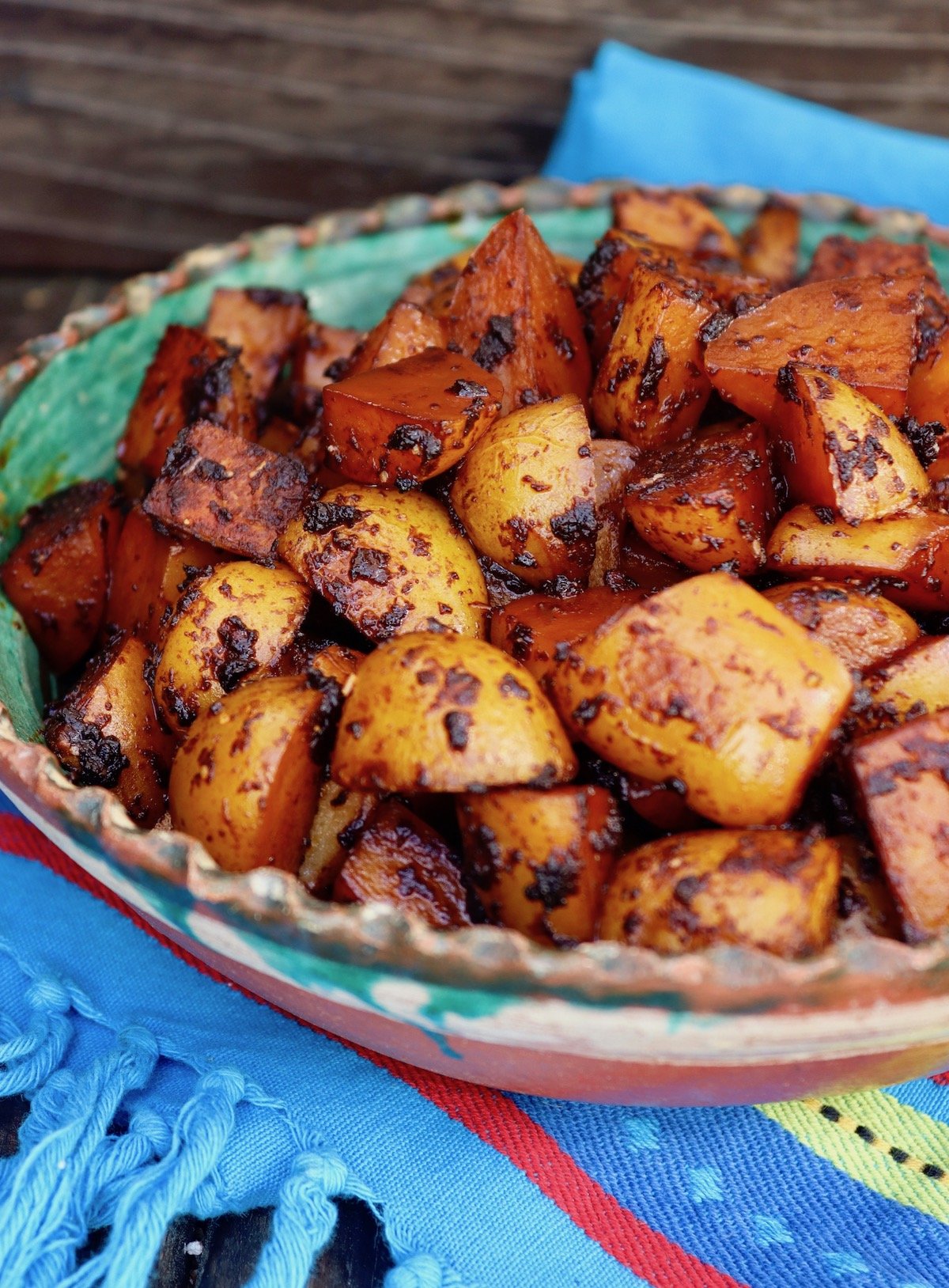
- Roasted vegetables. Toss vegetables in the sauce and roast. It's especially tasty with potatoes. (See potato image below.)
Below are recipes for enchiladas, pasta and potatoes with the ancho sauce as the star ingredient.
Whatever you decide to drizzle this sauce over or in, I hope you enjoy every last drop!
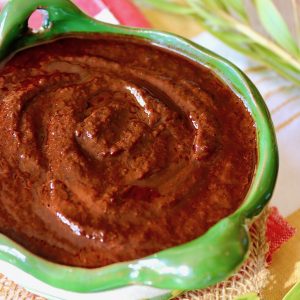
Ancho Chile Sauce Recipe
Equipment
Ingredients
- 4½ ounces ancho chiles (about 10 peppers)
- water
- 2 cups ancho chile hydrating liquid, reserved (see recipe instructions)
- 1½ cups vegetable stock
- 1½ tablespoons crushed garlic (about 4 cloves)
- 1 tablespoon ground cumin
- 1½ teaspoons granulated sugar
- 1½ teaspoon Kosher salt
- ½ teaspoon ground cinnamon
Instructions
- Hydrate dried peppers. Place the dried chiles in a medium-sized sauce pot and add just enough water to cover them. Bring the water to a boil, and then cover the pot and and turn off the heat. Let the chiles hydrate in the hot water until they're soft, at least 45 minutes.
- Prep peppers. Use a slotted spoon to take the chiles out of the pot, and keep the liquid in the pot! Remove the stems and seeds. Add the hydrated chiles to the blender. (If you're very sensitive to the heat, I suggest wearing cooking gloves.) Remove 2 cups of the hydrating liquid from the pot and pour it in the blender. (Do not throw out remaining liquid as you can use it as a stock in other recipes, like rice.)
- Add remaining ingredients to blender and blend. Add the stock, garlic, cumin, sugar, salt and cinnamon to the blender. Blend until the mixture is as smooth as possible.
- Use or store. Pour the sauce into a storage container with a tight fitting lid, and place in the refrigerator, where it should keep for at least 3 weeks.
NOTES
NUTRITION
Cooking On The Weekends is a participant in the Amazon Services LLC Associates Program, an affiliate advertising program designed to provide a means for sites to earn advertising fees by advertising and linking to Amazon.com.


Chris R
This sauce is arguably the best enchilada sauce we've ever had, and as other commenters have said, it pairs perfectly with the enchilada recipe. I made exactly per the instructions with one exception. Instead of adding granulated sugar I used two dates, pitted of course. They added a wonderful smoothness to the sauce without taking away any of the smokey, spicy flavor.
Valentina
So happy you made this to go with the enchiladas. And love that you tried it with dates for the bit of sweetness - thanks for sharing that in case others want to try it. I will! Thanks again! 🙂 ~Valentina
Tammy Skinner
You said the sugar lessons the tomatoey taste. No tomatoes in the recipe. Am I missing something ?
valentina
Hi Tammy, Thanks for writing in and I'm sorry about the confusion. It was an error to have included the tomato info in the recipe notes -- there aren't tomatoes in the recipe. I'm so sorry about that! That said, in the "Recipe Tips" I do mention that if you'd like to slightly lighten the sauce, you can add about 1 cup of roughly chopped, fresh tomatoes. Enjoy. 🙂 ~Valentina
David
Our sauces are pretty similar—minus the one ingredient, of course! 😉 I love this sauce—it is so versatile!
valentina
Oh that pesky garlic! 😉 I love that you often seem to use shallots instead. If I'm remembering correctly, your ancho sauce was served with steak. I'll be going back to revisit. ~Valentina
Chef mimi
I have always made and frozen ancho chile paste, probably because of our addiction to Mexican and Southwestern cuisines. As a result, I can make ancho chile sauce whenever I want, but I have always used it for enchiladas! What a great idea to use it on potatoes. I’m so excited!
valentina
I also adore Mexican and Southwestern cuisines! So great to have the chile paste frozen and at the ready. Thanks! 🙂 ~Valentina
angiesrecipes
Homemade enchilade sounds and looks heavenly with this ancho chile sauce. I probably would spread it on everything :-))
valentina
Thanks, Angie. That's exactly what I do. 🙂 ~Valentina