
This Kotosoupa Avgolemono recipe is comforting and delicious. Kotosoupa, a Greek chicken and lemon soup, is warm, cozy and delivers incredible fresh flavors that are both soothing and healing.
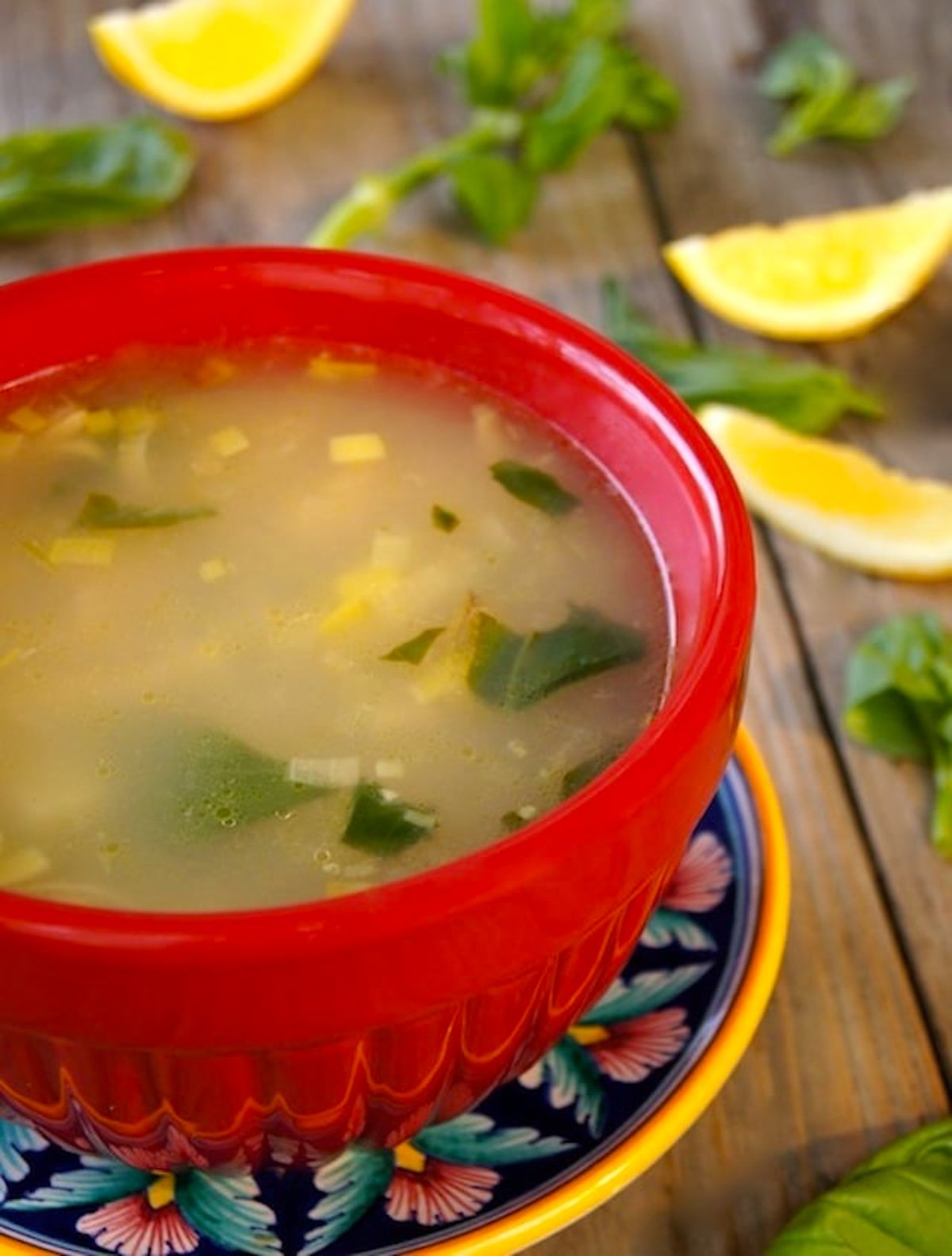
Move over Chicken Noodle, here comes something a little more interesting, and perhaps even more comforting. No joke!
What Is Kotosoupa Avgolemono?
At an authentic Greek restaurant in northern California, I ordered a bowl of an incredibly delicious, traditional Greek soup called Kotosoupa Avgolemono, and quite frankly, it blew my mind.
- Likely the most popular soup in Greece, it's sometimes referred to as the Penicillin of Greece, or Greek Penicillin.
- There's just something about heated lemon . . . it almost feels as though it will heal anything. Whether you need an energy boost, have a sore throat, or just need to be warmed up, a lemon soup can often do the trick. And with this Greek Chicken Lemon Soup, it's almost a sure thing.
- The stock is made from chicken and lemon, but can also include fish, veal, or lamb. The other most common ingredients in a Kotosoupa Avgolemono recipe are chicken, rice and eggs.
Though it's over the top delicious, my Kotosoupa recipe is not authentic and doesn't include the egg.
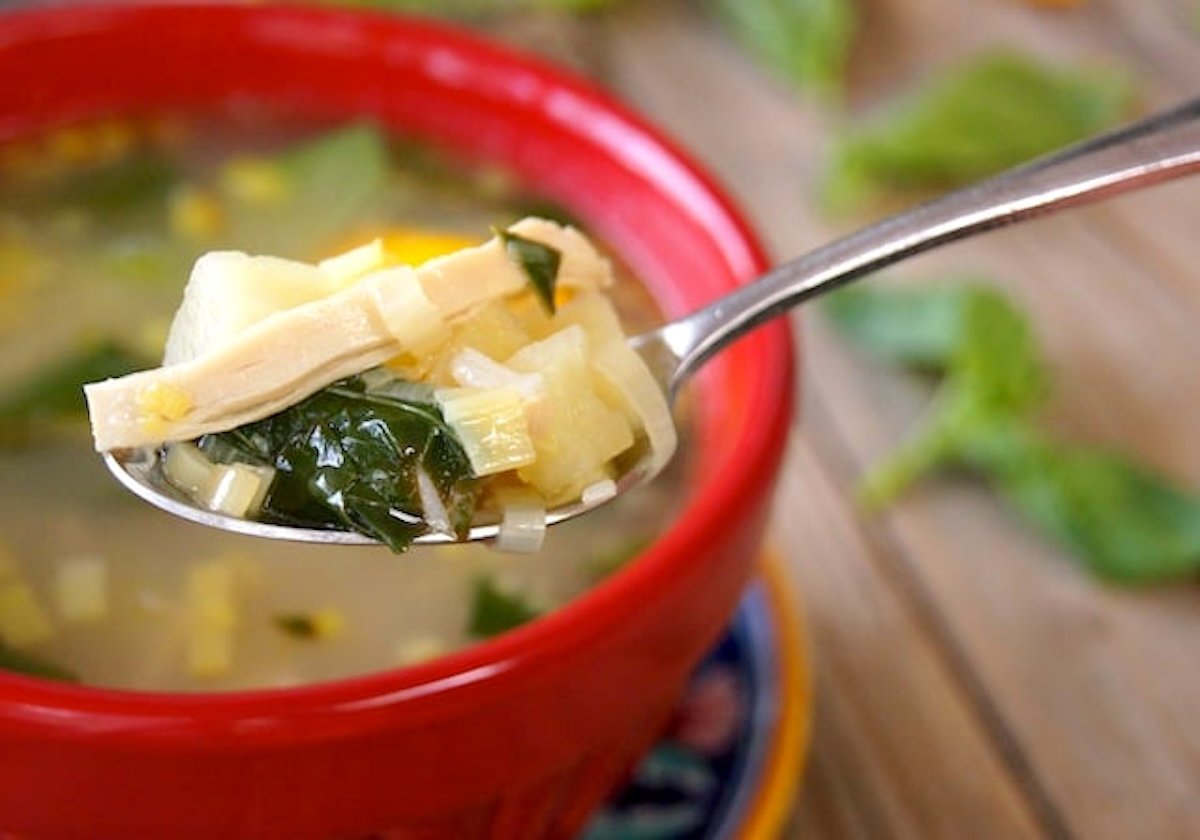
Whether you want to soothe a cold, cuddle up for dinner by a fire, or just want a warm meal, then believe me, this hearty, aromatic soup is the answer.
Recipe Tips
- I like using chicken thighs for this recipe because I like the darker meat -- however, you can use any cut you prefer.
- The texture of shredded chicken is really nice in soups, but takes a bit more time. If you want to speed things up, feel free to cut it into bite-sized pieces.
- If you want to mix things up, try using different fresh herbs or a combination. Dill or tarragon would be lovely.
More Must-Try Soothing Soup Recipes




I hope you enjoy every last spoonful of this delicious Kotosoupa Avgolemono. I'm hoping it will be one of your new go-to soups when you're craving a cozy bowl of something warm.
Kotosoupa Avgolemono Recipe
Ingredients
- 6 cups chicken stock
- 2 (approximately 5-ounce) chicken thighs, boneless, skinless
- 2 tablespoons olive oil
- 1 cup thinly sliced leeks, washed and dried, white portions only; save the rest to make vegetable stock
- 1 teaspoon minced garlic
- 1½ cups Russet potato, peeled, cut into approximately ¼ inch cubes
- ½ cup cooked Jasmine rice
- 6 tablespoons fresh lemon juice
- 1 cup packed baby basil leaves or larger leaves, roughly chopped
- salt and freshly ground black pepper
Instructions
- Cook the chicken. Add the chicken stock to a large soup pot and bring to a boil. Reduce the heat to low and add the chicken. Poach the chicken just until it's cooked through, about 8 minutes. Remove the chicken, place it on a plate to cool, and pour the stock into a large bowl. Set aside.
- Cook leeks and garlic, add potatoes. Coat the bottom of the same pot with the olive oil and place it over medium-low heat. Add the leeks and garlic and cook until the leeks have softened and the garlic is very aromatic, about 3 minutes. Add the potatoes and stir to blend.
- Simmer ingredients in pot with chicken stock. Pour the chicken stock back in the pot and bring to a boil. Reduce the heat to low, cover and let it simmer gently until the potatoes are tender, about 5 minutes.
- Shred chicken and add it to soup with rice, lemon and basil. While the soup is simmering, use your hands to shred the cooled chicken into bite-sized pieces. Once the potatoes are tender, add the shredded chicken, rice, lemon juice and basil to the pot. Cook until the basil has completely wilted.
- Season and serve. Season to taste with salt and pepper. (Here's How to Season to Taste.)
If you've made this, a star rating would mean so much and helps other readers too! If you haven't made it yet, please skip the stars and just leave a comment. I'd still love to hear from you.
Eha
A delightful soup which simply has to go back into rotation agaon ! I have a tendency to make a somewhat smoother version . . . strong homemade chicken stock, often orzo instead of rice, no chicken but a couple of eggs . . . lots of lemon juice . . . and I must try yours with the pronounced basil . . . . have the stock, may make it if our temos stay coolish under 35 C or so . . .