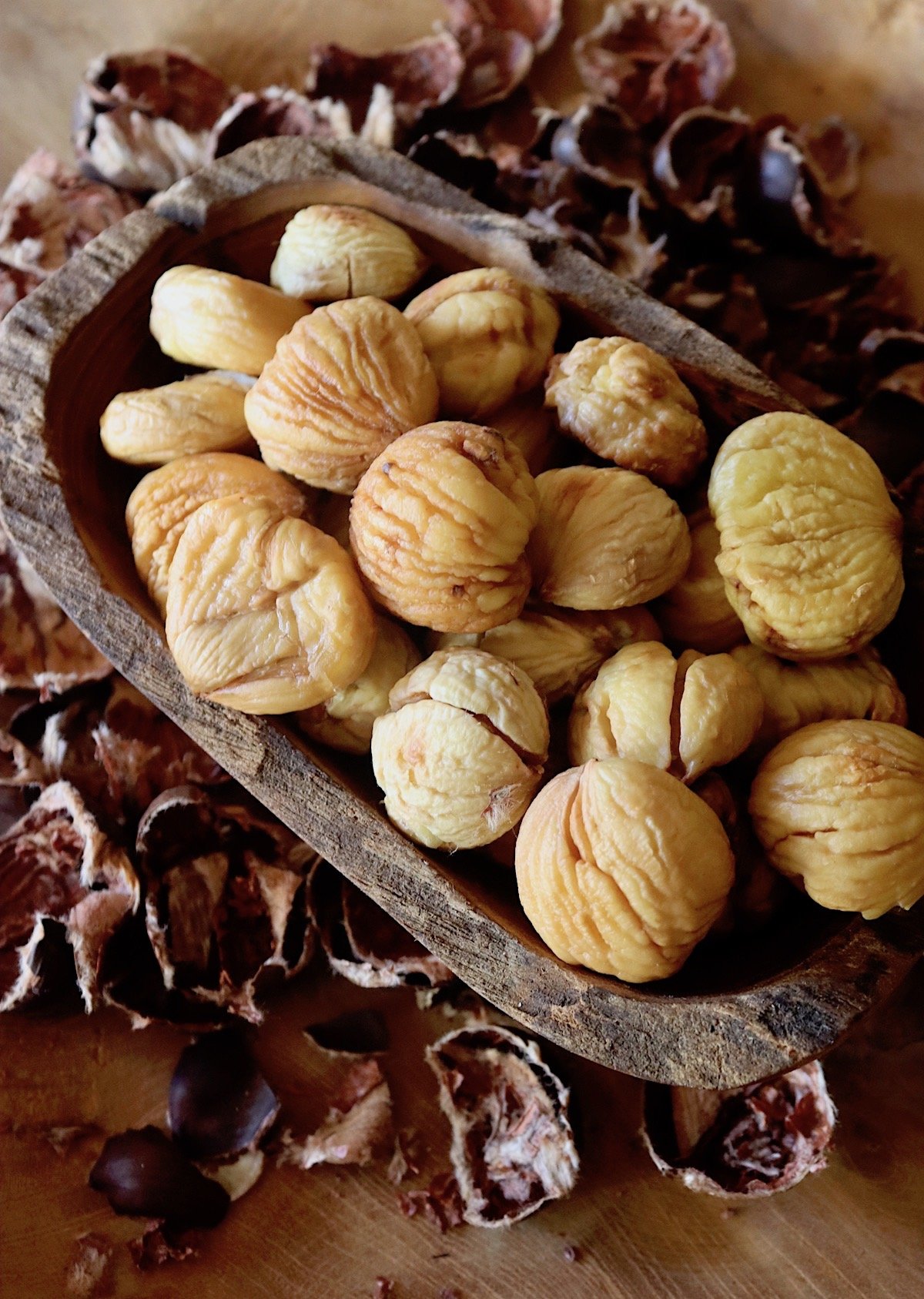
While roasting chestnuts on an open fire, like in the classic holiday song, would be lovely, it's easy and fun to learn how to roast chestnuts in the oven.
First, what are chestnuts?
- Chestnuts are a group of eight or nine species of deciduous trees and shrubs. Oak trees are in the same family, which is why the nuts look similar to acorns.
- The trees are native to temperate areas of the Northern Hemisphere.
- Chestnuts are considered to be an ancient nut, and are said to be one of the first foods consumed by humankind.
- Uncooked, chestnuts are covered in a hard shell and are about the size of a walnut in its shell.
- In stores — mostly during the holiday season — you can find chestnuts steamed and jarred, or puréed and canned, and shelled and roasted in the refrigerated, produce section of most markets.
- You can also buy chestnut flour which does not rise, but is delicious in various baked goods, like these Chestnut Chocolate Chip Cookies.
- Chestnuts are one of the lowest fat nuts, with less than 2% fat!
What do chestnuts taste like?
- Fresh chestnuts are different from most nuts in that they are unexpectedly soft and slightly chewy. Some people think the texture is similar to a baked potato.
- When chestnuts are cooked, their flavor is rich, buttery, subtly sweet and earthy.
- Their texture and flavor make them delicious in both sweet and savory recipes.

How to Roast Chestnuts
- Preheat the oven to 400°F.
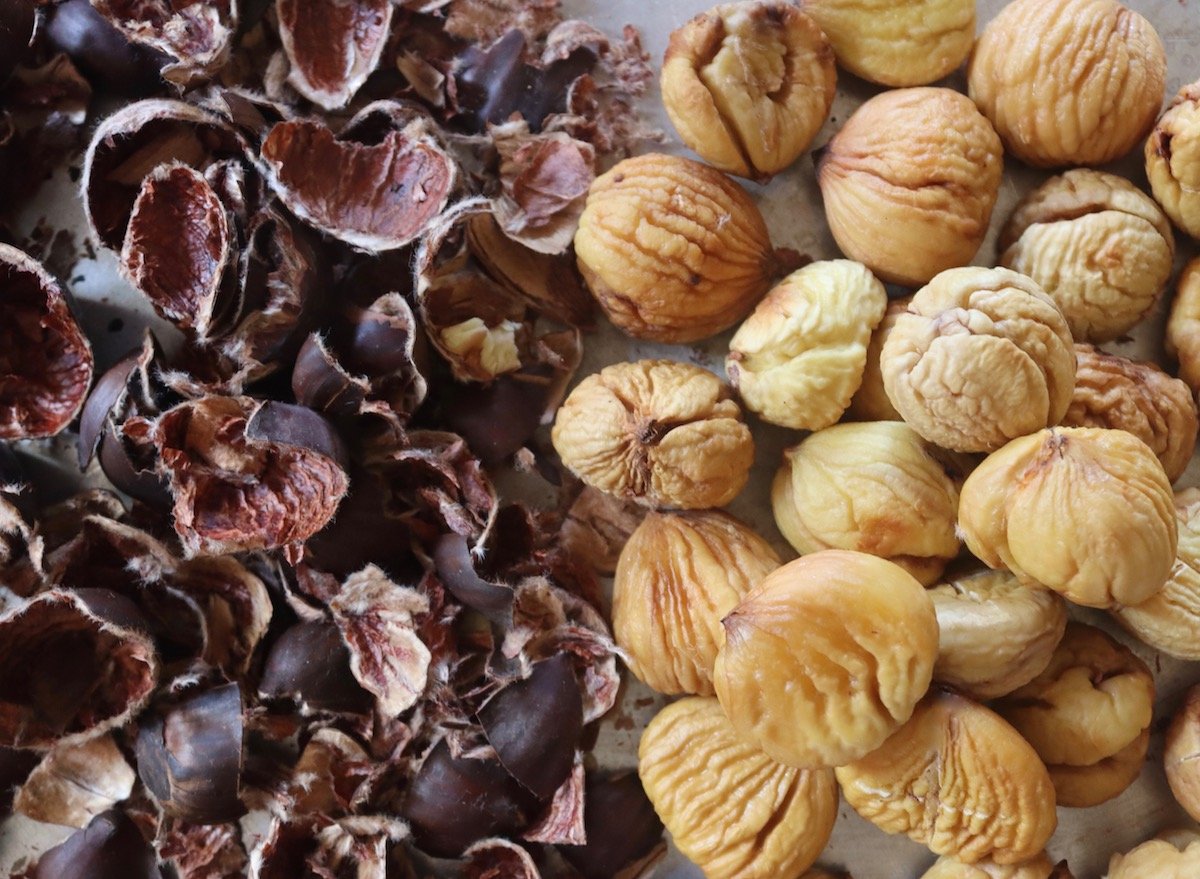
- Use a chestnut knife (or sharp paring knife) to make a large X through the shell and inner skin on the flat side of the chestnuts. This is called scoring.
- Place them on a baking sheet as you go.
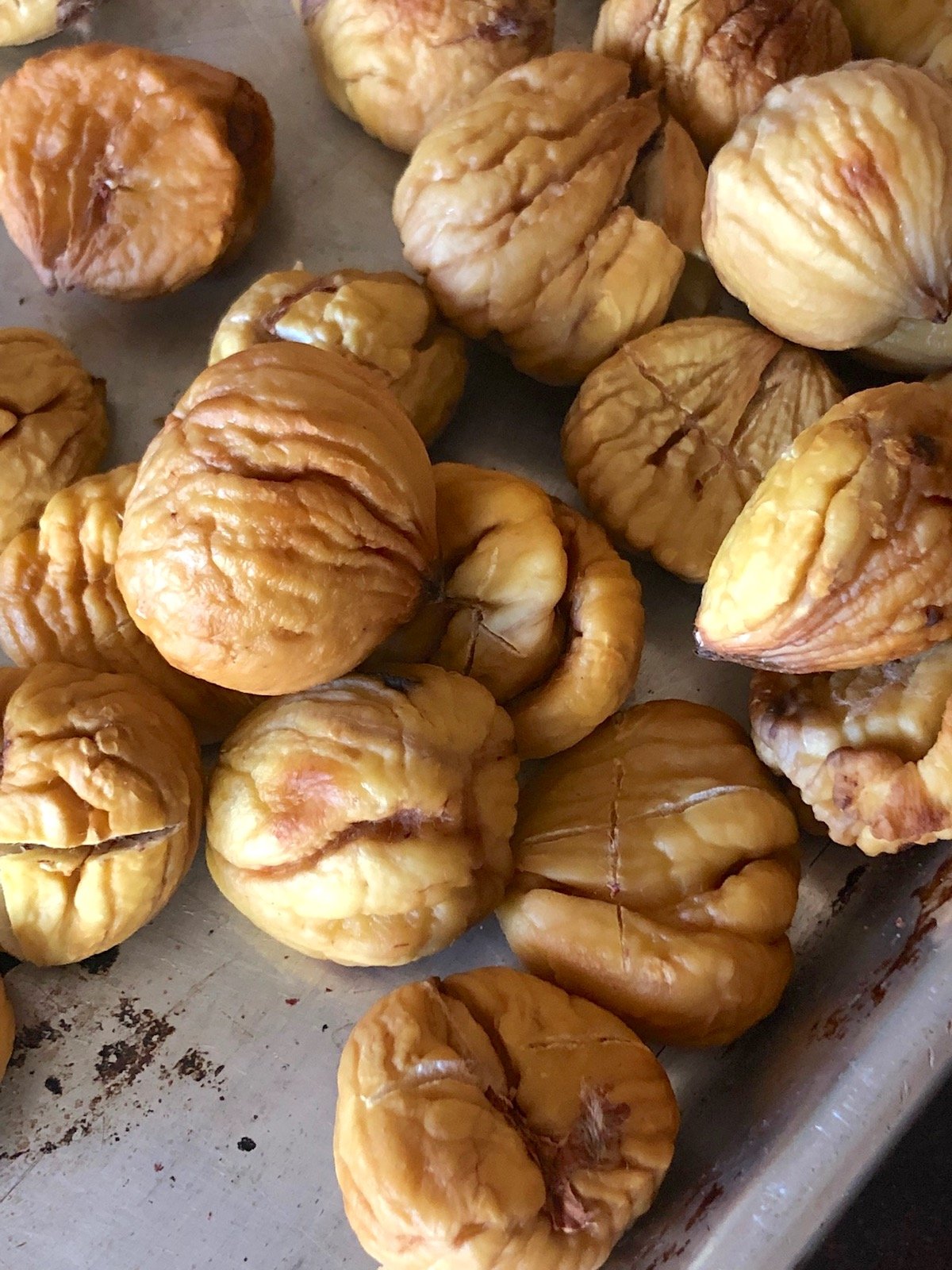
- Roast them in the preheated oven until all of the skins peel back, away from the chestnut. This will take about 25 minutes, and there will always be a few that don’t cooperate.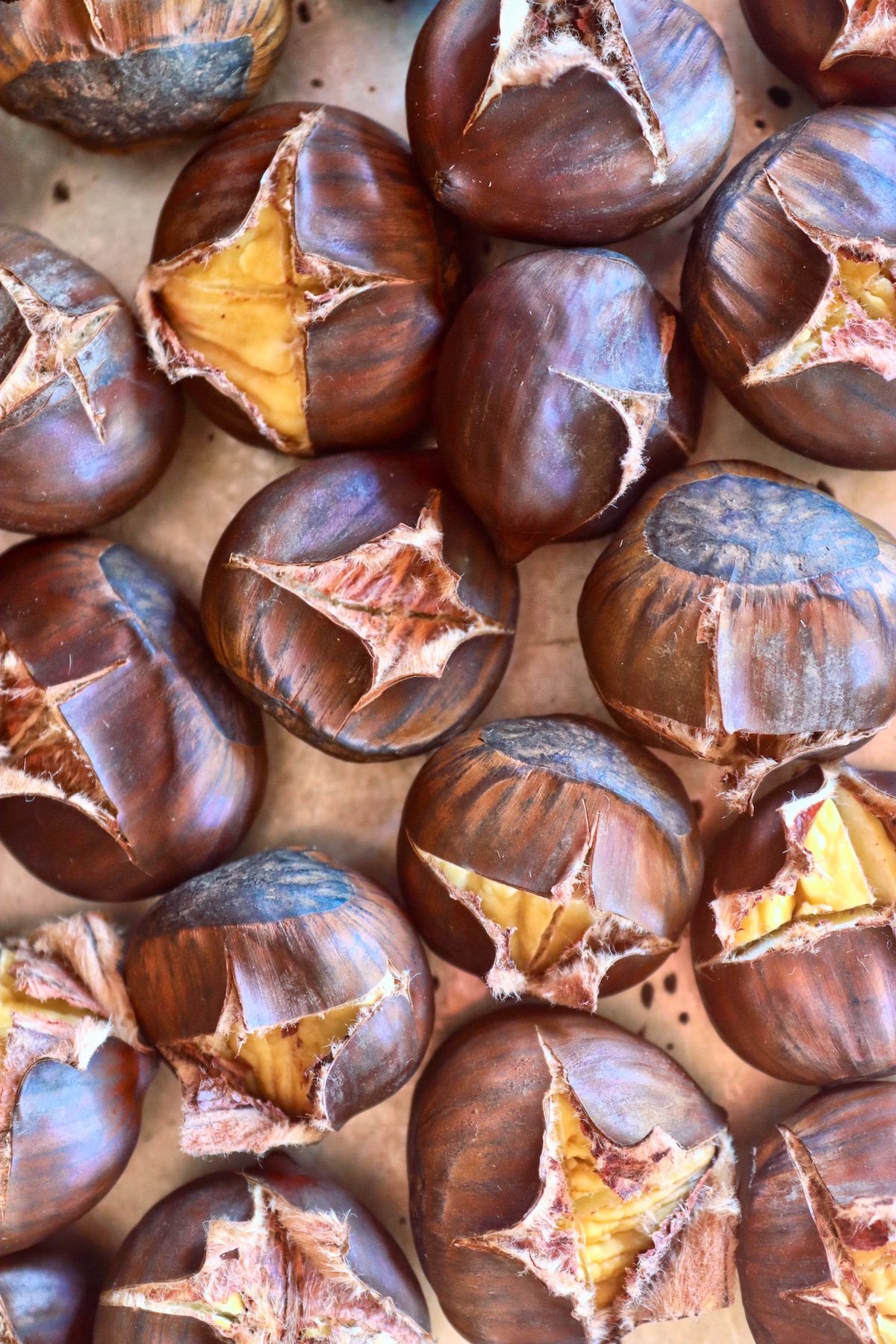
- Remove them from the oven and cover them with a kitchen towel for about 5 minutes before peeling. (They must still be warm to peel them.)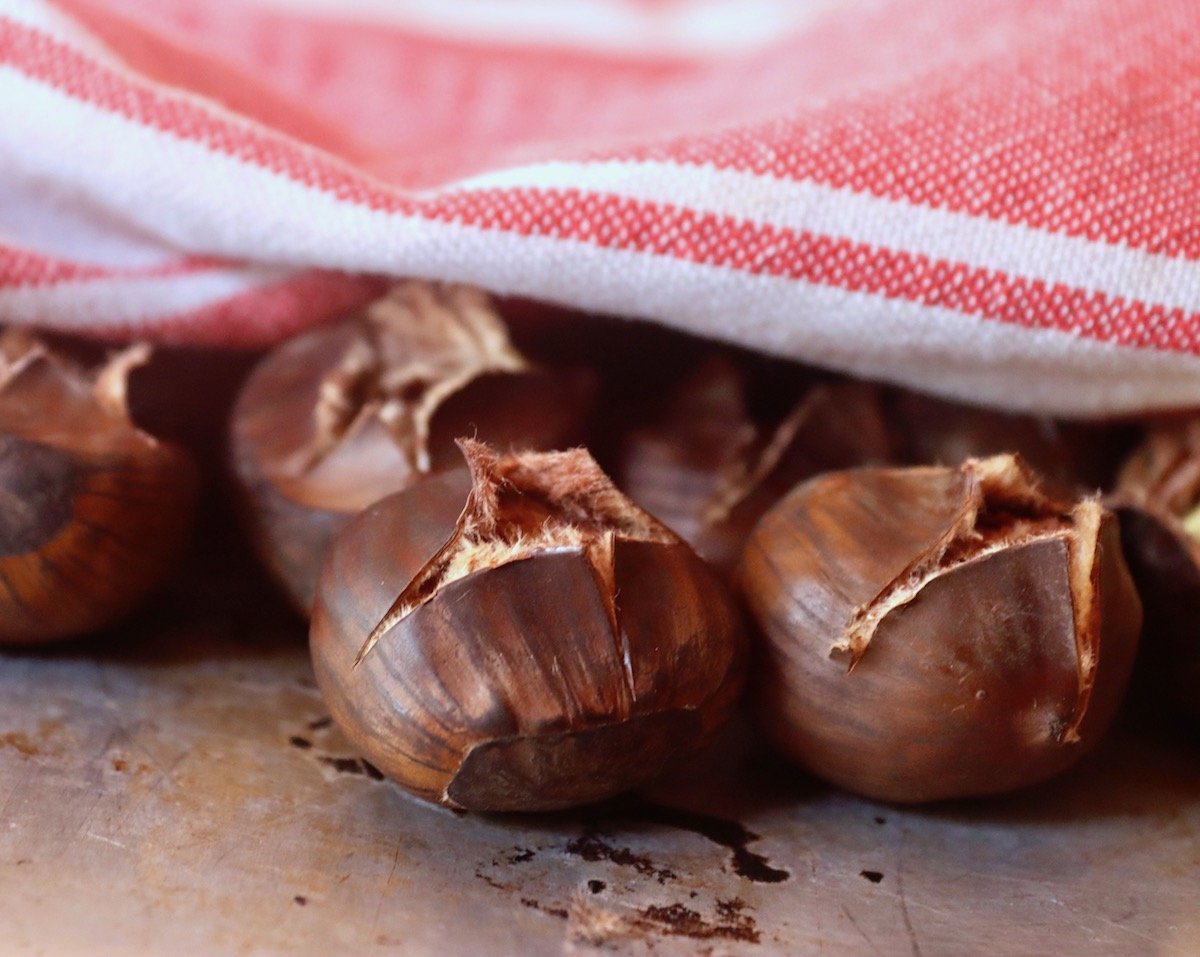
How to Peel Chestnuts
- Use your hands to peel the shell and skin off each nut, away from the X. (If the inner skin doesn’t come off with the shell, use the tip of your knife to help work it off the nut.) If some of the nuts become too cool before you’re able to peel them, simply pop them back in the oven for a couple of minutes to loosen the skins again.
How to Use Oven Roasted Chestnuts
In addition to being fabulous to munch on as they are, roasted chestnuts can be used in all sorts of both sweet and savory recipes. You can make soups, stews, stuffings, cakes, cookies, and then some.
Tips for Roasting Chestnuts
- I've had my Italian chestnut knife for over ten years, and though it doesn't get used but a few times a year, I love having it in my knife drawer. Ideally, you will use one for your chestnuts, but if you don't have one, a sharp paring knife works too.
- Chestnuts have an outer shell and inner skin. When you’re scoring them with the knife, the idea is to cut through these -- not the nut itself. If you do cut into the actual nut a bit, that’s okay!
- Many people find they're even easier to peel if they're soaked in hot water for a minute or so, and patted dry, before they're roasted.
- They must still be warm when you peel them. The cooler they become, the harder they'll be to peel.
How long will they keep?
- Before they're roasted, chestnuts should be refrigerated. Unlike most nuts, they do not have a high oil content so they can go bad quickly if left out.
- To eat them on their own, roasted chestnuts are at their best right after they're roasted. If you're planning to use them in recipes, they can be stored in the refrigerator for a few days.

*PLEASE NOTE* I recommend cooking chestnuts before you eat them or use them in recipes. According to WebMD, raw chestnuts are safe for most people, but they contain tannic acid, which can cause stomach irritation or nausea in some people and may be harmful for those with liver disease or significant kidney problems. Also, only use edible sweet chestnuts. Horse chestnuts look similar but are poisonous.
Once you know how to roast and peel chestnuts, they're the perfect winter afternoon, weekend cooking project.
And it will lead you to many wonderful chestnut-filled dishes!
Recipes with Chestnuts
- Chestnut Butter
- Chocolate Chestnut Cake
- Chocolate Chip Chestnut Cookies
- Braised Chestnuts and Pearl Onions
- Cream of Chestnut Potato Soup
Enjoy!

How To Roast And Peel Chestnuts
Equipment
Ingredients
- 1 pound whole, raw chestnuts
Instructions
- Set oven and prepare nuts. Preheat the oven to 400°F. Use a chestnut knife (or sharp paring knife) to make a large X through the shell and inner skin on the flat side of the chestnuts. Place them on a baking sheet as you go.
- Roast. Roast them in the preheated 400°F oven until all of the skins have peeled back, away from the chestnut, about 25 minutes. (There will always be a few that don’t cooperate.) Remove them from the oven and cover them with a kitchen towel for about 5 minutes before peeling. (They must still be warm to peel them.)
- Peel. Use your hands to peel the shell and skin off each nut, away from the X. (If the inner skin doesn’t come off with the shell, use the tip of your knife to help work it off the nut.) If some of the nuts become too cool before you’re able to peel them, simply pop them back in the oven for a couple of minutes to loosen the skins again.
NOTES
NUTRITION
Cooking On The Weekends is a participant in the Amazon Services LLC Associates Program, an affiliate advertising program designed to provide a means for sites to earn advertising fees by advertising and linking to Amazon.com.

amanda
I grew up in West Virginia, and there are here and there in the woods, old American Chestnut trees... ones that resisted blight. I don't know why you are telling everyone not to eat them raw?? I ate them raw every fall. You check for bugs of course, but unmolested, freshly fallen chestnuts are delicious. they are already earhy and slightly sweet, frest out of their husk. Just FYI.
Valentina
Hi Amanda, Thanks for writing in and for the information. When I originally wrote this, in my research, all of my sources said they were "dangerous" to eat raw and that one shouldn't, which is why I wrote it. Upon receiving your comment, I looked into this again and did find that WebMD and a few other sources say the can be eaten raw, but not by everyone because of they contain tannic acid. I've updated the post accordingly. Thanks again for bringing this up. 🙂 ~Valentina
Liz
What a great tutorial. I remember hunting and hunting for chestnuts a few years ago to make a chestnut mousse. You've given me another excuse to buy some!!
valentina
Thanks, Liz. Chestnut mousse sounds fantastic! I'd love to see that recipe. 🙂 ~Valentina
Chef Mimi
This is a great, informative post! Unfortunately I have never been able to get my hands on real fresh chestnuts. My mother told me a horror story about my grandmother, who was dingy anyway, put the chestnuts in her oven without making the X. This was probably in the 1940’s. It sounded like bombs exploding, and she and her husband had to hold skillets up in front of their faces in order to ready the oven and stop the bombing!
valentina
Mimi, while I feel for your grandparent having to avoid the "bombing," this is a great chestnut story! 😀 I've heard of a similar, but less dangerous but messier explosion, of an eggplant without being pricked first with a fork. I hope you come across some fresh chestnuts sometime -- they're super fun and tasty to roast and cook with. ~Valentina
2pots2cook
Since Christmas Market opened it's doors this Sunday, there is smell of roasted chestnuts and castagnole all over the place. Perfect timing to post this one!
valentina
Lucky you! sounds like a very dreamy scent to have in the air. 🙂 ~Valentina
Melissa
I would love to make this, however I’ve noticed at times there may be a tiny worm in some of the chestnuts. You don’t know this until raw chestnuts are peeled and broken or cut. Do you have any comments on how to handle this? Thank you for any comments on this and the unique idea.
valentina
Hi Melissa, I found some information that might be helpful for you from the American Chestnut Foundation ---> https://patacf.org/wp-content/uploads/2015/02/Eating-Chestnuts.pdf
This is not my area of expertise, and I suppose I've been fortunate that I've never happened upon one of these worms (PHEW!)
From my research, it seems action has to take place right after harvest (boiling the nuts) to get rid of them. I do know if there are tiny holes in the shell, that's definitely an indication that they might be there or have been.
I hope the link above is useful and good luck! 🙂 ~Valentina